
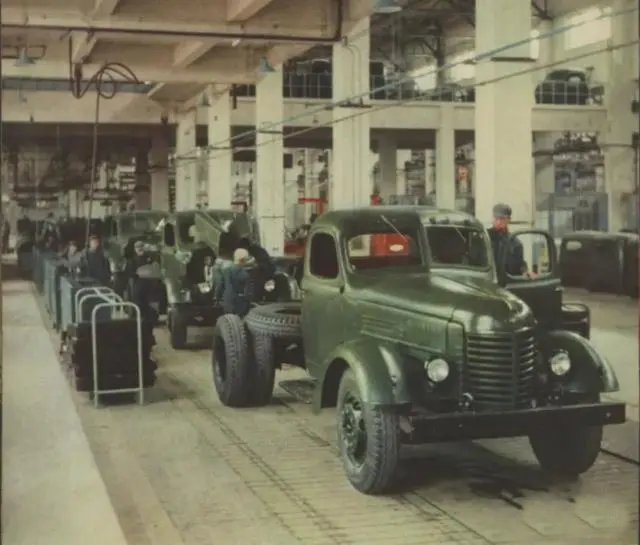
At the beginning of the founding of the People's Republic of China, Chairman Mao Zedong pointed out: "Except for being able to make tables, chairs, tea bowls, and teapots, and grinding the grown grain into flour, a car, an airplane, a tank, or a tractor cannot be made."
At that time, China was "one poor and two white", but the Chinese people, who did not bow down to difficulties, started from scratch. While fighting against the United States and aiding Korea, defending their country, and promoting revolution and production, they focused their limited resources on the industrial sector from the beginning of the "First Five Year Plan". By the 13th Five Year Plan period, they had basically achieved industrialization, gradually moving towards an industrial and manufacturing power.
On September 20, 2019, on the eve of the 70th anniversary of the founding of the People's Republic of China, the Chinese Ministry of Industry and Information Technology announced to the world that China has formed a complete modern industrial system, with 41 industrial categories, 207 industrial categories, and 666 industrial subcategories, making it the only country in the world to have all the industrial categories listed in the United Nations Industrial Classification. The words "all industrial sectors" may sound simple, but behind them lies a series of difficulties. This is the waist pole of China. My waist is hard, of course I'm not afraid of anything!
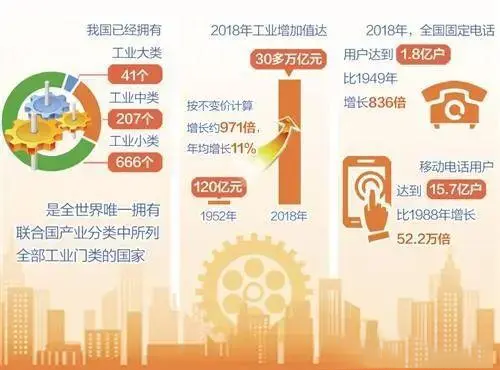
Firstly, China's industry has achieved a historic leap. In 1952, China's industrial added value exceeded 12 billion yuan, in 1992 it exceeded 1 trillion yuan, in 2007 it exceeded 10 trillion yuan, in 2012 it exceeded 20 trillion yuan, in 2018 it exceeded 30 trillion yuan, and in 2022 it exceeded 40 trillion yuan, accounting for 33.2% of GDP. This is a miracle in the history of human economy, created by Chinese enterprises and workers.
Secondly, China will return to being the world's largest manufacturing country. According to World Bank data, in 2010, China's manufacturing added value reached 1.92 trillion US dollars, surpassing the United States for the first time and becoming the world's largest manufacturing country. In 2022, the added value of China's manufacturing industry accounted for 27.7% of GDP, and the scale of the manufacturing industry ranked first in the world for 13 consecutive years.
Thirdly, China has created a miracle of world industrialization. In just a few decades, China has completed the industrialization process that developed countries have gone through for hundreds of years. Over the past 70 years, calculated at constant prices, China's industrial growth has been about 971 times, with an average annual growth rate of 11%. Among the more than 500 major industrial products in the world, China has the world's largest production of over 220 industrial products.
Fourthly, China has become the world's largest exporter. According to customs statistics, the scale of China's foreign trade reached a new historical high in 2022. In 2022, China's export of goods reached 23.97 trillion yuan, an increase of 10.5%; The trade surplus of goods reached 668.6 billion US dollars, an increase of 19%. According to the latest calculation, China's international export market share is 14.7%, ranking first in the world for 14 consecutive years.
Behind trade lies manufacturing. Made in China continuously provides the world with high-quality and affordable necessities for people's daily lives.
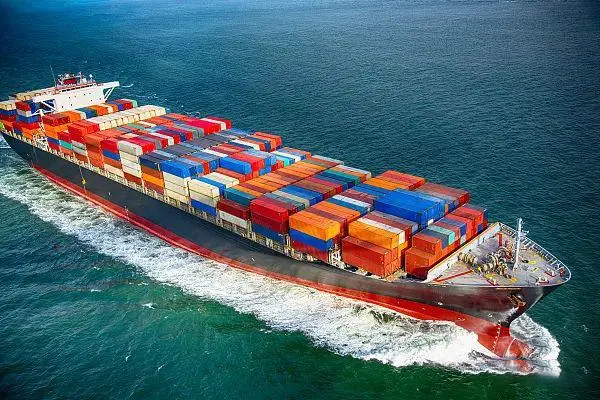
Behind the numbers lies quality. The annual export of over 20 trillion yuan is an astronomical figure. High quality Chinese manufacturing and meticulous craftsmanship have supported nearly 24 trillion yuan in export data and reputation.
The hat of "counterfeit and inferior" has long become history. Made in China has gone from being a "follower" in the past to today's "parallel" and even moving towards being a "leader".
The story of two "gold medals" is the best footnote to China's manufacturing level.

The first one is the gold medal of Russian artistic gymnast Darya at the Beijing Olympics. On the evening of January 7, 2021, Daria lit a candle in her bedroom and then went to the kitchen to cook. However, she didn't expect the candle to fall off and light a book, causing the bedroom to burst into flames. The firefighters extinguished the big fire. But Daria's house was completely burned, her furniture was destroyed, the walls were blackened, and her laptop was burned out. While packing her things, Daria unexpectedly discovered that a gold medal was not damaged, and even looked intact. This gold medal is exactly the gold medal of the Beijing Olympics.
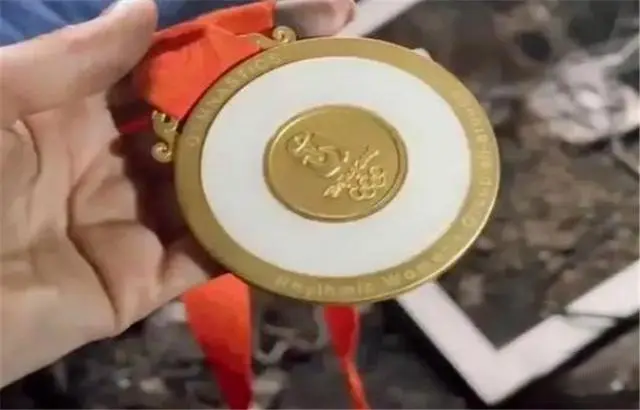
Interestingly, the ribbon of the gold medal is also intact. Originally, the medal ribbons for the 2008 Beijing Olympics were made of 38% mulberry silk and 62% polyester synthetic fiber double-sided fine woven jacquard, with a maximum density of 1402 pieces per inch. The ribbon treated with high-tech nanomaterials can be waterproof, moth proof, stain proof, fireproof, and never fade.

The second piece is the gold medal of Chinese female trampoline athlete Zhu Xueying at the Tokyo Olympics. On the afternoon of July 30, 2021, in the women's trampoline final of the Tokyo Olympics, Chinese actress Zhu Xueying won the gold medal. In less than a month, on August 24th, Zhu Xueying admired the gold medal for the coach and found some spots on the surface. At first, she thought it was dirty and went to wipe it, but found that it couldn't be removed. Then, she tried to pick it out, but ended up removing a large piece. Regarding the external attention, Zhu Xueying responded to the process of "gold medal peeling" and said, "At the beginning, I wanted to know if other athletes have the same situation. It really can't extract chocolate!"
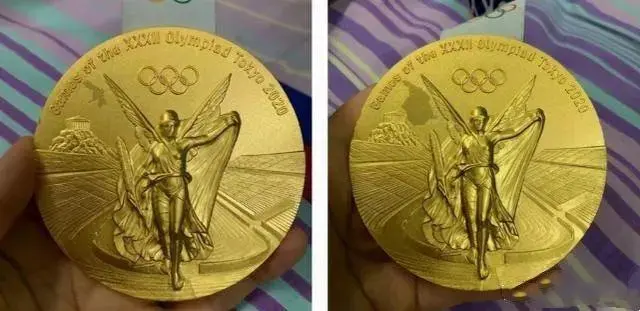
The Japan Mint responded to the gold medal peeling incident at the Tokyo Olympics: a series of questions regarding whether the gold medal peeling was caused by technical manufacturing issues and whether it could be replaced need to be investigated by the Tokyo Organizing Committee for the Olympics. The Tokyo Organizing Committee for the Olympics claimed that the part that fell off the gold medal was just a film, not the gold-plated layer, and that the loss of this film did not affect the quality of the gold medal.
The gold medals of the Beijing Olympics are famous for their "gold inlaid jade" craftsmanship. The strict quality control of medals at the Beijing Olympic Games can ensure that they fall 2 meters without damage. The "gold inlaid with jade" medal also achieved the belief that "true gold is not afraid of fire". Beijing's gold medal is like this, and so is Chinese manufacturing. Today's "Made in China" is surpassing German made, Japanese made, and American made, and is slowly rising in the east of the world.
In the long river of human history, if manufacturing leads, civilization leads.
In the long history of mankind, the manufacturing industry has always been a key factor in leading civilization. China, as the only country with all industrial categories in the world, has made remarkable achievements in manufacturing. Since the founding of the People's Republic of China, China has made great progress in industrialization, from the initial stages of relying on imported equipment and technologies to becoming the world's largest manufacturer today. The Windproof Highspeed Open Shutter, Industrial Standardized Door, NDustrial Sectional Door, Sectional Door Industrial Use, Warehouse Electrical Door and other products have become the symbols of China's manufacturing industry, representing the highest level of technology and quality in the global market. China's manufacturing industry has not only met the domestic demand but also exported a large number of high-quality products to the world, contributing to the global economy and trade development. In the future, China will continue to promote the technological innovation and quality improvement of its manufacturing industry, striving to become a leading manufacturing powerhouse in the world.