
Clothing distinguishes people from animals, and the rich and colorful clothing is a symbol of social civilization and progress. From fur leaves, to linen, to silk, and then to cotton products, with the upgrading of clothing and clothing, especially the modernization of the cotton textile industry, civilization has been constantly pushed to a higher stage.
Both in China and the West, the initiation of industrial civilization was related to the textile industry, and the industrial revolution began with steam driven spinning machines. Similarly, China's textile industry has witnessed the rise and fall of the country since its inception.
China is the country with the most complete industrial categories in the world, with 666 specific industrial subcategories. At a special moment in the international trade game, each category can be said to have important value for key issues such as employment and economic security for the people. They cannot be missing any of them.

Surviving amidst the cracks
During the Opium War, a British capitalist once prophesied: "As long as each Chinese person buys a cotton sleeping hat every year, there is no need for more, then the existing factories in England will be in short supply."
Britain launched an aggressive war with the aim of not only selling opium but also dumping cotton textiles.
The humiliating first unequal treaty signed by China in modern history, the Treaty of Nanjing, forced the Yangtze River Delta region to open the doors of Shanghai and Ningbo to imperialist powers. The Western economic aggression destroyed China's self-sufficient small-scale farming economy for thousands of years, and also led to the disintegration of the handicraft textile industry in the Yangtze River Delta, which had just taken shape as capitalism.
In 1840, the value of cotton yarn and fabric imported from Britain to China was 327137 pounds. By 1856, this value had risen to £ 1544235. Compared before and after, the growth has exceeded four times.
Cotton textiles account for 50-82% of British goods, while the price of woven yarn and cloth is only one-third of that of Chinese woven fabric. Low price dumping has led to the loss of cotton and the disappearance of most of the market in southern Jiangsu. The developed handicraft textile industry in Songjiang and Taicang has fallen into a situation where there is no yarn to spin. It is recorded that in southern Jiangsu, "the livelihood of the people is difficult to maintain, and there is no reason for collapse.".
In order to prevent the accumulation of foreign goods, Li Hongzhang founded the Machine Weaving Factory (commonly known as the Western Layout) in Yangshupu, Shanghai in 1890. This was the first cotton textile enterprise in Chinese history, which was a product of the Qing Dynasty's Westernization movement's attempt to "strengthen itself and survive" in the face of Western powers.
Under the huge war reparations and military expenses, the Qing Dynasty, which was unable to operate as an official, also began to rely on private forces to establish factories, indirectly promoting the rise of the cotton textile industry in the Yangtze River Delta. At this time, Shanghai has Zhenhua, Tongchang, and Deda, Wuxi has revitalization, Changshu has Yutai, and Jiangyin has utilization. The form of private official shares has also begun to emerge. Zhang Jian's Dasheng Textile Factory established in Nantong had Zhang Zhidong, the Governor of Liangjiang, invest in official textile equipment.
However, the newly emerging national industrial and commercial industry has encountered the impact of Japan.
After the Sino Japanese War of 1894-1895, the Qing Dynasty signed the Treaty of Shimonoseki, which not only added Suzhou and Hangzhou as commercial ports in the Yangtze River Delta, but also allowed foreign countries to open factories at commercial ports. The economic aggression of imperialist powers towards China shifted from product exports to capital exports, and Japan began to enter the Chinese market by opening a large number of yarn factories in Shanghai and other places, which suppressed the development of the national textile industry.
The turmoil caused by the invasion of China by the Eight Nation Alliance and the economic impact of the Boxer Rebellion resulted in no new factories landing in the country for the next six years.
Before 1912, the national cotton textile industry was concentrated in the Yangtze River Delta region centered around Shanghai and struggled to grow. Over the past 70 years, a total of 23 yarn factories were built. After the outbreak of World War I, invading powers were too preoccupied, and the national industry and commerce generally ushered in a golden period of development nationwide.
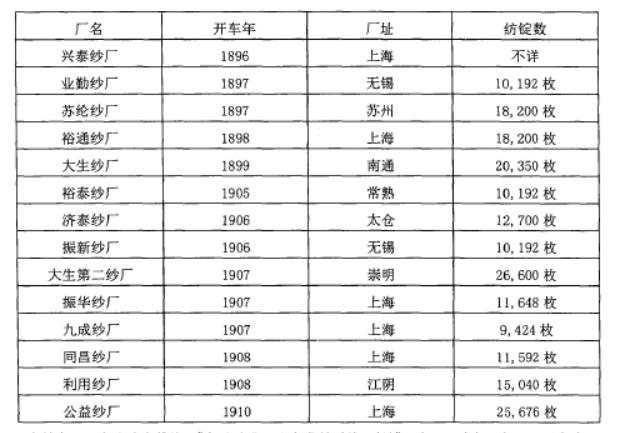
A Brief Table of Newly Opened Chinese Commercial Yarn Factories in the Yangtze River Delta from 1896 to 1910
Due to the dramatic increase in cotton yarn consumption caused by the European war, the number of imported cotton yarn fabrics sharply decreased, and the sales of exported cotton yarn fabrics opened up, allowing the national cotton textile industry to expand rapidly. The national capital cotton textile factories built within three years from 1920 to 1922 exceeded the total number of textile factories in the country in the 20 years before the war.
During this golden period, the newly built textile factories in the Yangtze River Delta region accounted for more than half of the total number in the country, continuing to lead the development of the national cotton textile industry. Shanghai has become the region with the most concentrated development of modern cotton textile industry. The Shenxin Textile Company, founded by the brothers Rong Zongjing and Rong Desheng, registered the "Renzhong" trademark cotton yarn brand, becoming the first textile product in the history of Chinese brands produced by a national enterprise. The cotton textile industry in other regions of the Yangtze River Delta has also made significant progress. The Nantong Dasheng Textile Factory, which pioneered modern ethnic textile industry, also won the Gold Award at the Craft Museum of the Panama International Exposition in San Francisco, USA.
In 1915, Japan proposed the "Twenty One Demands" aimed at annihilating China, which were boycotted by the people of the whole country and the sales of Japanese goods were suppressed. On this basis, the May Fourth Patriotic Movement further promoted the development of ethnic enterprises. The Sanyou Industrial Society, founded by modern entrepreneurs such as Chen Wanyun in Shanghai in 1912, quickly rose during this period. The "Triangle" brand towels produced completely broke the monopoly of Japanese "Iron Anchor" brand towels in the Chinese market, and in the 1930s, this Japanese brand that had dominated the Chinese towel market for 50 years was driven out of the Chinese market.
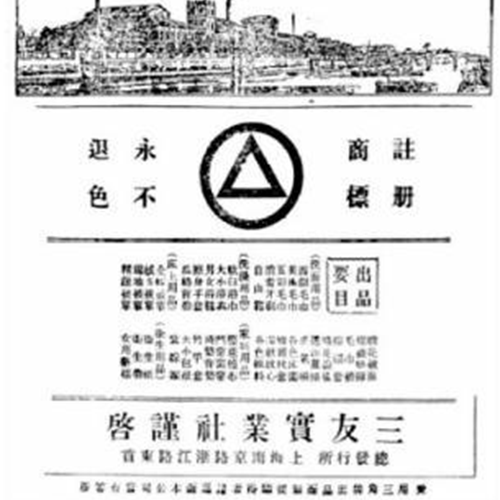
"Triangle" brand trademark of Shanghai Sanyou Industrial Society
In the semi colonial and semi feudal era, good times cannot last long.
After the end of World War I, imperialist forces led by Japanese and British capital invaded the Chinese market again. A large amount of imported gauze has flooded in, and the raw material cotton is in short supply. The national textile industry is facing difficulties under the attack of "cheap yarn and expensive flowers". In Shanghai alone, there are 9 yarn factories that have suspended night shifts or reduced operations, and more than 30 factories that have been sublet, restructured, or sold.
In the novel "Midnight," Shanghai industrialist Wu Sunfu, known as the "Three Gentlemen," established a foreign silk weaving factory and a foreign fire factory. Ironically, he himself smoked matches made in Switzerland, and his female family only wore dresses bought from Paris. The book describes the contradictory situation of the national weaving industry represented by Mr. San at that time as follows: "Chinese silk was made into silk and satin overseas, but still sold to China. Nine out of ten silk machines in Hangzhou used Japanese made silk. One side had no sales for domestic silk, while the other side used foreign artificial silk for domestic weaving. This year, there were more than 18000 Japanese made silk imported from Shanghai, worth over 9.8 million yuan."
The life of an industry is bound to follow the trend of national fortune. Under the run on Japanese goods, ethnic enterprises are on the brink of death, like the end of a strong crossbow. With a gunshot at Lugou Bridge, the modern national textile industry also entered darkness amidst the national crisis.
Until the establishment of the People's Republic of China, the central government established a Ministry of Textile Industry, which regarded the textile industry as the most important industrial sector in the early "First Five Year Plan" construction. Various parts of the country vigorously built "textile cities", and this industry, which was born in national humiliation, finally prospered.

The Great Transformation of Globalization
A hundred years later, imports and exports will take shape. According to data from the World Trade Organization, the export value of China's textile industry was approximately 110 billion US dollars in 2018, making it the world's largest exporter of textiles.
However, the colored glasses and arrogant attitudes of those vested interests who once established the global order have not changed at any time. China is constantly changing, but they have only resorted to suppression methods despite their various innovations.
As early as 1982, the United States took anti-dumping protection measures against China's polyester cotton printed fabrics and cotton towels. In 2007, the United States launched anti-dumping measures against ripe silk in the Yangtze River Delta region. In the trade friction between China and the United States, the United States announced a 25% tariff on almost all categories of textile products that cover China's exports to the United States, involving an amount of approximately 45 billion US dollars. The textile industry has become a major disaster area in the trade war. Affected by this, the total export value of textiles in the Yangtze River Delta region in 2018 was only 39.55 billion US dollars, a year-on-year increase of 6%.
A hundred years of changes, a tumultuous autumn. The recent trade dispute between China and the United States has not yet subsided, and the still hot Xinjiang cotton incident has once again pushed the cotton textile industry to the forefront of the game.
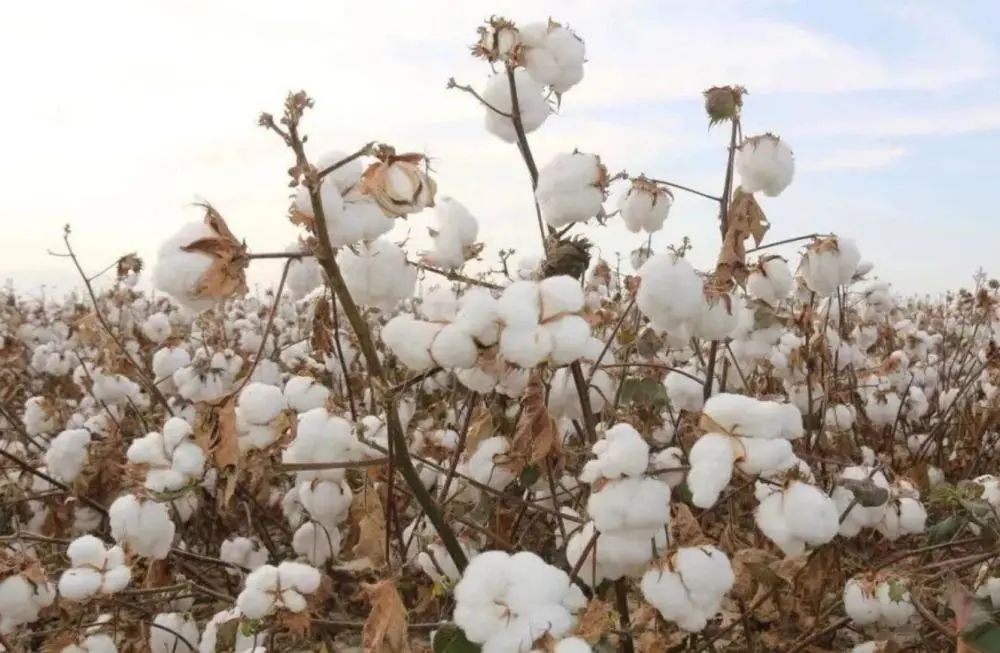
Several foreign companies, including H&M, have launched malicious attacks on China's cotton textile industry in front of Taiwan, with the Good Cotton Development Association (BCI) as the mastermind behind the scenes.
In the response from BCI Shanghai Representative Office, the phrase "under pressure from all aspects" is worth careful consideration.
Whose pressure?
Since 2019, American media has repeatedly criticized BCI for using "forced labor" to question its credibility in cotton textile professional standards. In 2020, the US Department of Agriculture established the US Cotton Trust Agreement, which requires all US funded enterprises to use the US version of the Certification System and Supply Chain Traceability System.
BCI headquarters would rather lose its membership fee income this time, "cutting ties" and "smashing its own signs", obviously to meet the demands of the United States. However, the outcome of BCI abandoning the principle of fairness is to be "torn down". The United States clearly has a desire to replace it in leading the international rules and order of the cotton textile industry.
What are the benefits of this fuss for the United States?
Xinjiang cotton accounts for 85% of the national cotton production, with good cotton accounting for 15-18%. The suspension of BCI certification this time means that China's cotton textile industry needs to import 400000-500000 tons of good cotton from abroad every year to ensure the retention of customers who require good cotton certification. The United States is the largest source of cotton imports in China, accounting for 45% of all imports.
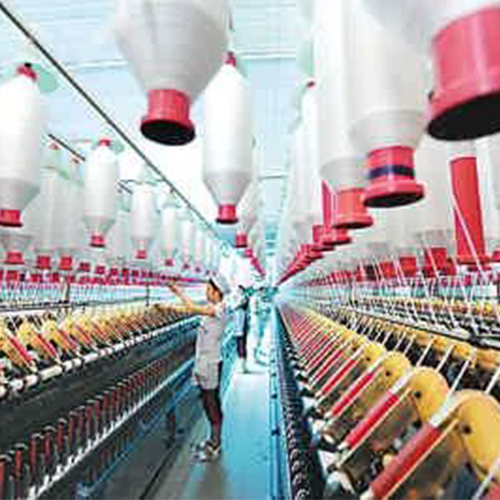
The high cost of oil imports rising to over $100 per barrel in the past and the painful experience of chip imports being choked now prove that the manufacturing industry, which cannot be self-sufficient and relies on imported raw materials, will inevitably struggle. If the reputation of Xinjiang cotton is damaged, resulting in the inability to produce but not use it, it will inevitably affect China's bargaining power over cotton, and downstream textile industry exports will once again lose competitiveness due to increased costs. As a cotton exporting country, the United States can enjoy the dual benefits of rising prices and soaring sales.
The reason why it is said to be a political stigma is that this time the East and the West are not only competing for economic interests, but also carrying geopolitical attacks.
More than 50% of farmers in Xinjiang grow cotton, with ethnic minorities accounting for 70%. Cotton is the main source of income for farmers in Xinjiang, especially in Uyghur settlements such as Hotan, Aksu, Kashgar, and Kezhou in southern Xinjiang. Cotton planting income accounts for over 80% of total agricultural income. The cotton textile industry has driven nearly 600000 local people to find employment.
It can be imagined that the unfounded accusations against Xinjiang cotton have caused harm to the local economy, which will further threaten regional stability, ethnic unity, and national security.
Using false statements and political issues to interfere with and disrupt international trade, achieving three birds with one stone in the United States, BCI has opened a non-profit organization to act as a bad leader in international political games.
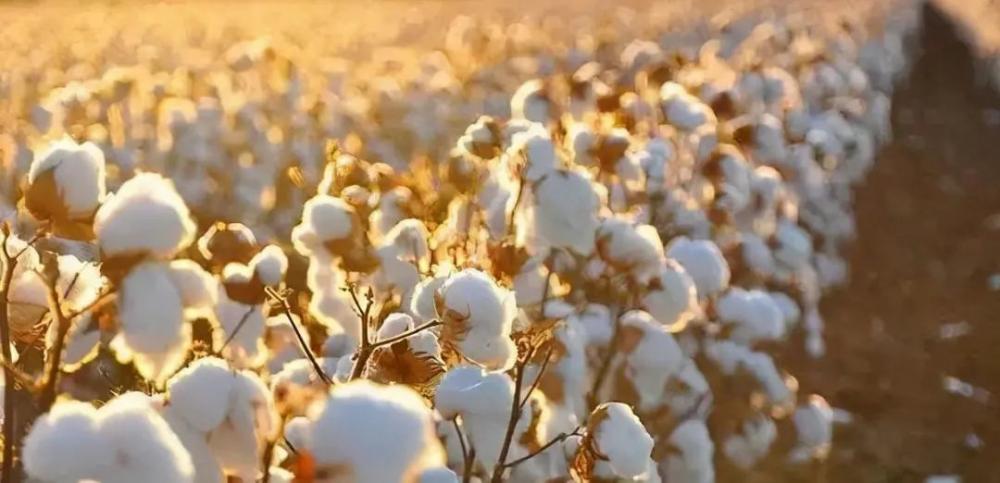
Unfortunately, the pure white cotton has become a sacrifice that has been cast with shadows.

Industry transfer abroad?
The southern part of the Yangtze River Delta is an important gathering area for China's textile industry, with two-thirds of China's textile industry bases and characteristic towns. Its output value accounts for more than one-third of the country's textile industry scale, and exports account for half of the country's total. In addition, the local textile equipment is advanced, with strong textile machinery manufacturing capabilities, abundant talent resources, and a complete industrial chain.
At present, Jiangsu and Zhejiang provinces have formed specialized cluster distribution characteristics.
In Zhejiang, Shaoxing City and Shaoxing County mainly produce chemical fibers and fabrics, Shangyu mainly produces cotton textiles, Shengzhou mainly produces neckties, Zhuji mainly produces socks, and Xinchang mainly produces wool and spinning machines.
Jiangsu already has nearly 30 textile and clothing clusters, with a complete industrial chain system and significant agglomeration effects of small and medium-sized enterprises, such as the clothing sector in Changshu, the woolen textile sector in Jiangyin, the silk sector in Wujiang, the woolen sweater sector in Zhangjiagang, the home textile sector in Haimen, and the textile sector in Wujin, Changzhou. In addition, Jiangsu has a large number of characteristic towns with "one township, one product", such as Haiyu Town and Shajiabang Town, a famous town for leisure clothing, Hengfan Town and Xingang Town, a famous town for sweaters, Hutang Town, a famous town for weaving, Sanxing Town and Chuangang Town, a famous town for weaving fabrics, Zhitang Town, Shengze Town, a famous town for silk, and so on. Suzhou, Wuxi, Kunshan and other places have also successively built large-scale clothing cities, forming a strong agglomeration effect of the textile and clothing industry.
But with the rising cost of human resources in Shanghai, southern Jiangsu, and Zhejiang regions, high land and water and electricity costs, and continuous rise in production factor prices, there is an urgent need for industrial upgrading. The demand for ecological environment protection is becoming increasingly prominent. In order to launch the "Blue Sky Defense War", Hangzhou will shut down 144 heavily polluting enterprises, including printing and dyeing, by the end of 2018; A large number of textile enterprises in Changzhou have suspended production and limited production; Keqiao Textile Enterprise was subjected to carpet style inspections, and 47 were ordered to stop production; Jiaxing has 7 textile companies listed on the environmental protection blacklist. It can be seen that the transfer of traditional textile industry to economically underdeveloped areas has become inevitable.

Textile factory wastewater
The question is, where will it go?
In China, options include northern Jiangsu, central China, and Xinjiang.
Northern Jiangsu is located on the eastern coast, with relatively convenient transportation and lower labor costs compared to southern Jiangsu. It also has a certain foundation in the textile industry. In addition, northern Jiangsu is one of the important cotton production bases in Jiangsu and even the whole country. In 2007, the cotton production in northern Jiangsu was 133500 tons, which is 3.3 times that of southern Jiangsu.
However, northern Jiangsu also faces the tragedy of environmental pollution. The printing and dyeing industry, as a crucial link in the textile industry, poses a serious threat of water pollution. With the significant closure and transfer of polluting enterprises in various cities in northern Jiangsu, the textile industry in northern Jiangsu has adopted more models of enterprises entering professional parks and jointly building parks through north-south linkage for industrial transfer.
Xinjiang is the largest cotton producing region in China, and nearby production can save transportation costs. The country actively promotes textile aid to Xinjiang and employment from the perspective of regional stability, development, and improving people's livelihoods. In 2015, there was even a saying that for every ingot produced in Xinjiang, the mainland would shut down five ingots. But Xinjiang has a natural hard wound of severe water resource shortage. In regions with an average precipitation of only 23% of the national average, it is difficult to develop the most critical printing and dyeing link in the extension of the textile industry chain. Where water comes from and where it flows is a thorny issue.
Central Anhui, Hunan, Hubei, and Henan are all regions with higher cotton production. The labor cost is relatively low, and transportation between Wuhan and Zhengzhou is convenient. During the 11th and 12th Five Year Plans, Anhui and Henan both proposed actively undertaking the transfer of the textile industry in the Yangtze River Delta. Currently, one-third of China's cotton production is circulating in the Zhengzhou Commodity Exchange futures market. The price of Zheng Shangsuo is an important indicator and reference for global cotton prices, which has made great contributions to China's protection of the cotton industry chain and acquisition of cotton pricing power. This is also the deep-seated key point pointed out by the United States in the Xinjiang cotton incident.
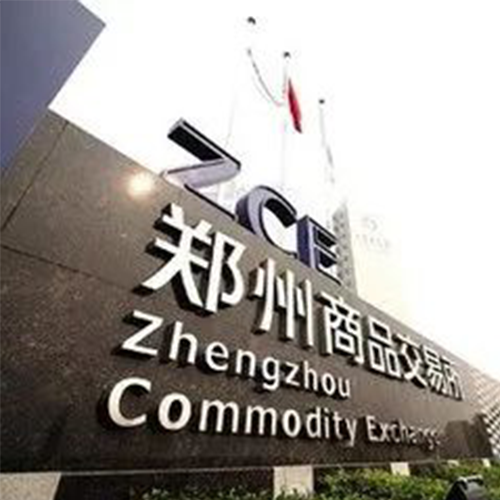
Zhengzhou Commodity Exchange
Industrial transfer to other countries, mainly Southeast Asia and India.
In recent years, there have been many voices in Southeast Asia accepting the transfer of China's textile industry, mainly due to their advantages in manpower, water and electricity, and taxation. The labor cost in Vietnam is only 2/3 of that in China, the wage in Cambodia is only 1/3 of that in China, and the cotton import cost in ASEAN is 3000 yuan/ton lower than that in China.
India has been eyeing closely. When the United States raised tariffs on our textiles, India announced a ban on importing silk from China to reduce its dependence on Chinese textile raw materials. At that time, many Indian industry insiders believed that they were about to seize the "fat meat" of the low-end textile industry from China, and spring was about to come.
However, Meimeng did not grow, and a large number of orders that could not be produced normally in India due to the epidemic flowed to China, and some companies even went directly to China for procurement. Even the Chinese textile industry, which has a wide range of knowledge, is boiling over the large amount of orders.
In 2020, a global pandemic brought shame to India, which was attempting to make a comeback, and also brought many Chinese people to their senses.
When masks become a "hard currency", why can only China fully unleash its power, expand production capacity fourfold within a month, and exceed 100 million units per day?
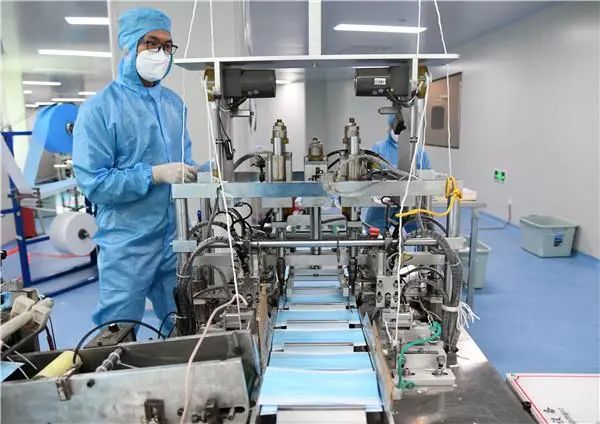
Having the world's most complete industrial structure and chain has become a source of pride for the Chinese people. The common business and division of labor among different industries have jointly facilitated the cross-border wonder of rapid adjustment of production and restructuring of industrial chains.
Do you think raw materials are not important? A piece of meltblown cloth can defeat a hero.
Do you think the textile industry is not high-end enough, so hurry up and pack it up and transfer it abroad? Children's clothing production enterprises can produce 600 sets of protective clothing within 3 days of resuming work.
When the United States experienced massive unemployment and a rising trade deficit due to industrial hollowing out, and when Italy's Lamborghini could only hand sew "luxury masks", those who had once believed in evil could see how Europe and America had deceived themselves with "industry transfer abroad to force promotion", and also see the embarrassment that these countries could not afford to return to manufacturing.
From cotton to textiles, from raw materials, low-end to mid to high end, 207 out of 41 industrial categories and 666 industrial subcategories in China must be neatly left on the country's land, and not a single one can be left behind. No one wants to seize or destroy it.
China: The Ultimate Destination for Comprehensive Range of Industrial Door Accessories
China, the global powerhouse of manufacturing, boasts the most comprehensive range of industrial door accessories in the world. With a strong focus on innovation and quality, the country offers an extensive selection of high-performance door accessories that cater to diverse industrial applications.
Electric roller shutter door accessories
China is a leading manufacturer of electric roller shutter door accessories, renowned for their durability, reliability, and ease of operation. Designed for efficient opening and closing, these accessories provide convenient access control and enhance the functionality of industrial doors.
High speed door accessories
The high speed door accessories from China are specifically engineered for high-speed doors, ensuring smooth and efficient operation. These accessories are crucial for maintaining the performance and durability of high-speed doors, which are widely used in various industrial settings.
High speed rolling shutter door accessories
The high speed rolling shutter door accessories from China are precision-made for the rolling shutter doors. They offer reliable solutions for various industrial applications, ensuring smooth operation and durability. These accessories enhance the functionality and security of rolling shutter doors.
Roller shutter door accessories
China has a wide range of roller shutter door accessories available, designed to meet different industrial needs. Whether it's for noise reduction, improved security, or better sealing, these accessories provide convenient and effective solutions. They are sturdy and reliable, ensuring longevity and performance in a variety of demanding industrial environments.
In conclusion, China's comprehensive range of industrial door accessories offers exceptional value to industries worldwide. With a commitment to innovation and quality, China's door accessories manufacturers continue to pioneer advanced solutions that enhance the functionality, security, and efficiency of industrial doors.